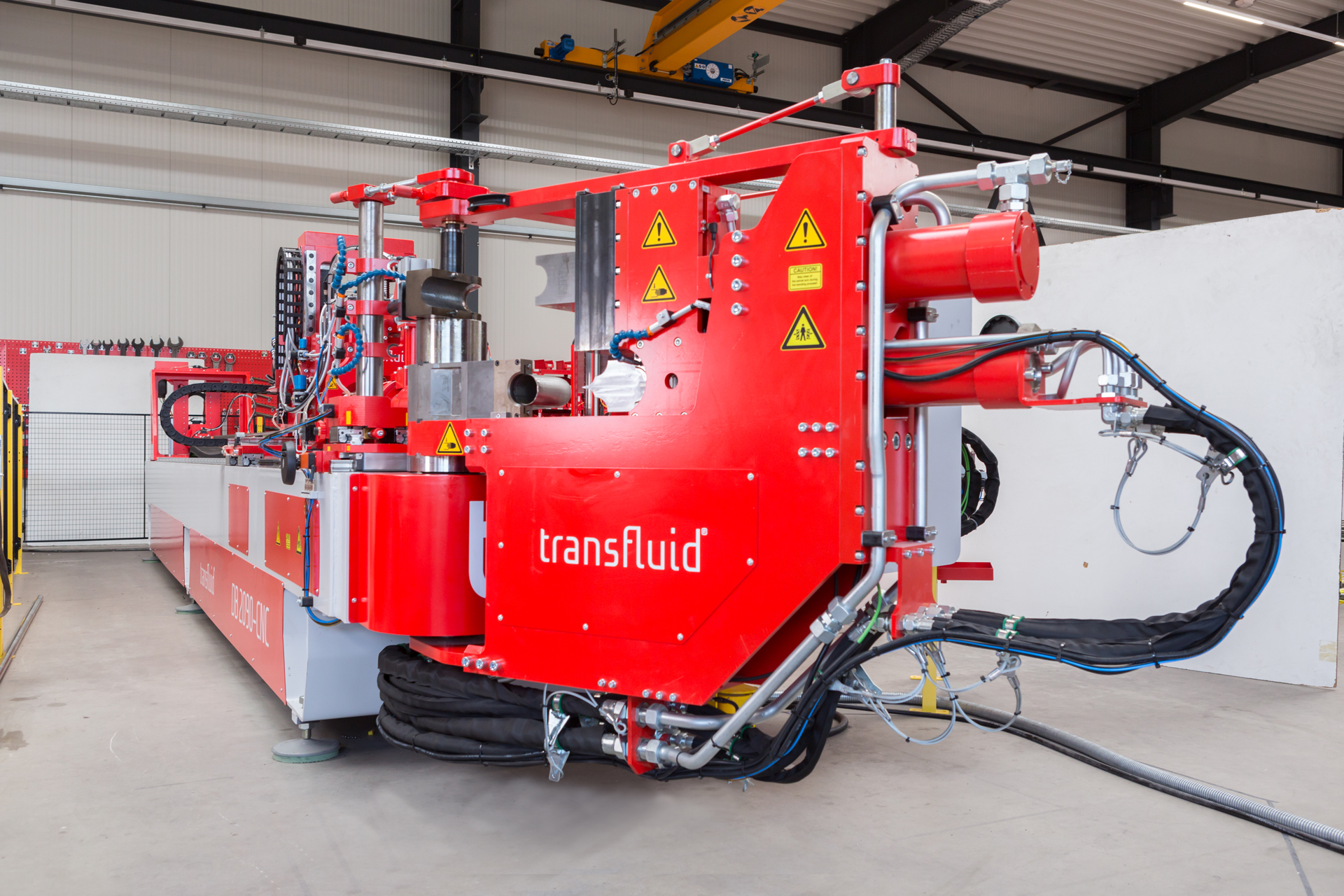
CNC-Dornbiegemaschine t bend POWERLINE 90 von transfluid in einer Produktionshalle für das präzise Biegen von Metallrohren in der industriellen Rohrbearbeitung.

New, more energy-efficient economy

Energy savings of up to 70 % compared to conventional hydraulic systems: an impressive figure for the new transfluid technology. And it pays for itself from the very first use.


Our aim with this technological development was to create a solution for the previously inadequate energy efficiency of hydraulic drives. After all, they have significant advantages such as their unique power density and great robustness. Now their efficiency has also improved significantly, which has a lasting ecological impact through energy savings.

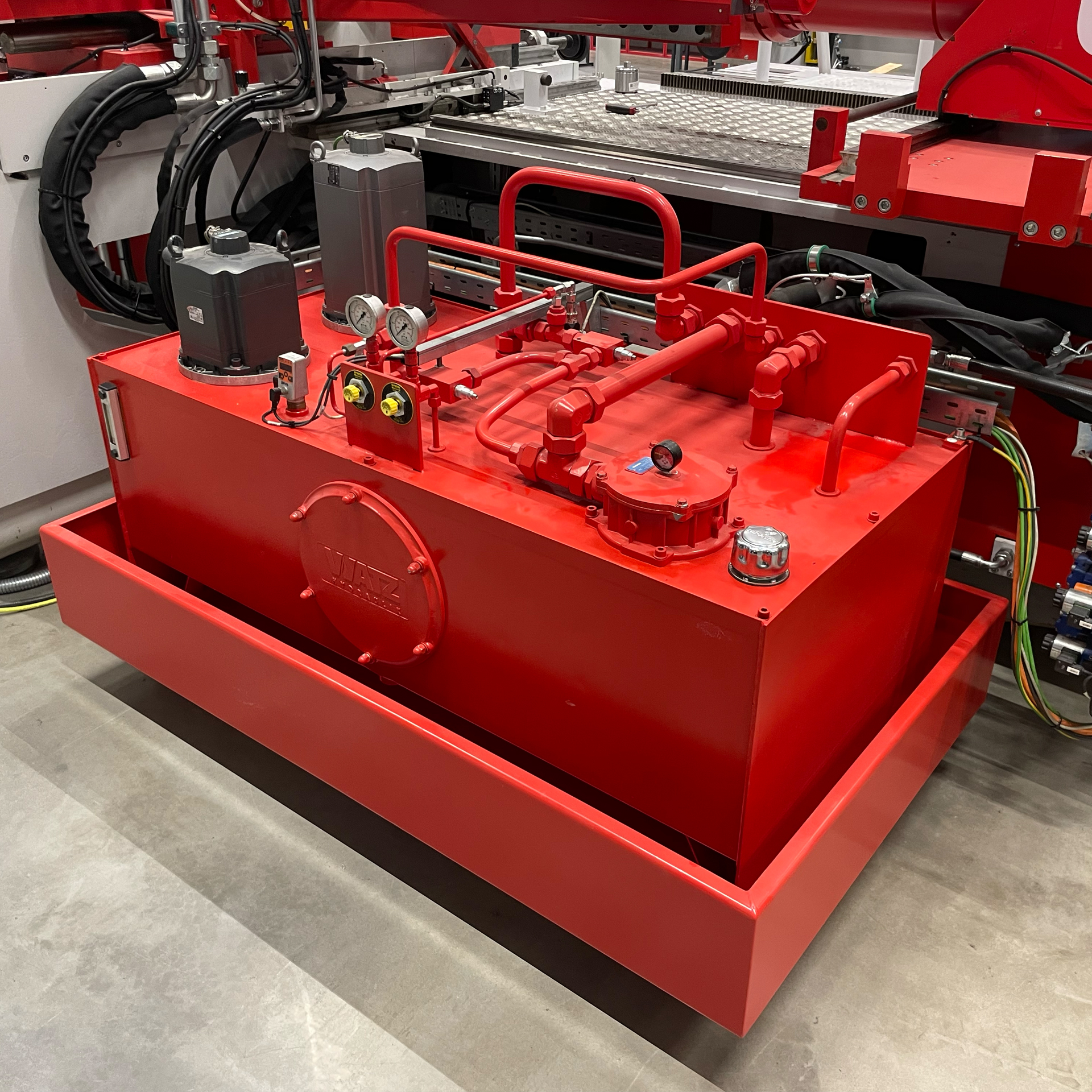
Rotes Hydraulikaggregat einer servo-hydraulischen Rohrbiegemaschine mit Servomotor, Druckanzeigen und Hydraulikleitungen zur präzisen Energieversorgung der CNC-Rohrbearbeitung.

Increasing the service life of all hydraulic components

The effective interaction of various technical details is crucial for the energy efficiency of our new hydraulic drives. We use servomotors to control the hydraulic pumps. The speed and thus the volume flow of the pump is precisely adapted to the pressures. Energy losses due to the detour of oil during pressure regulation are therefore eliminated.


And if, for example, the electromechanical axes, the rotation or the longitudinal feed are active on a bending machine, the servo pump is at a standstill. This reduces the total switch-on time of the pump and thus saves energy. Small motors and pumps and the implementation without cooling support this energy-saving effect. Noise emissions are also low.

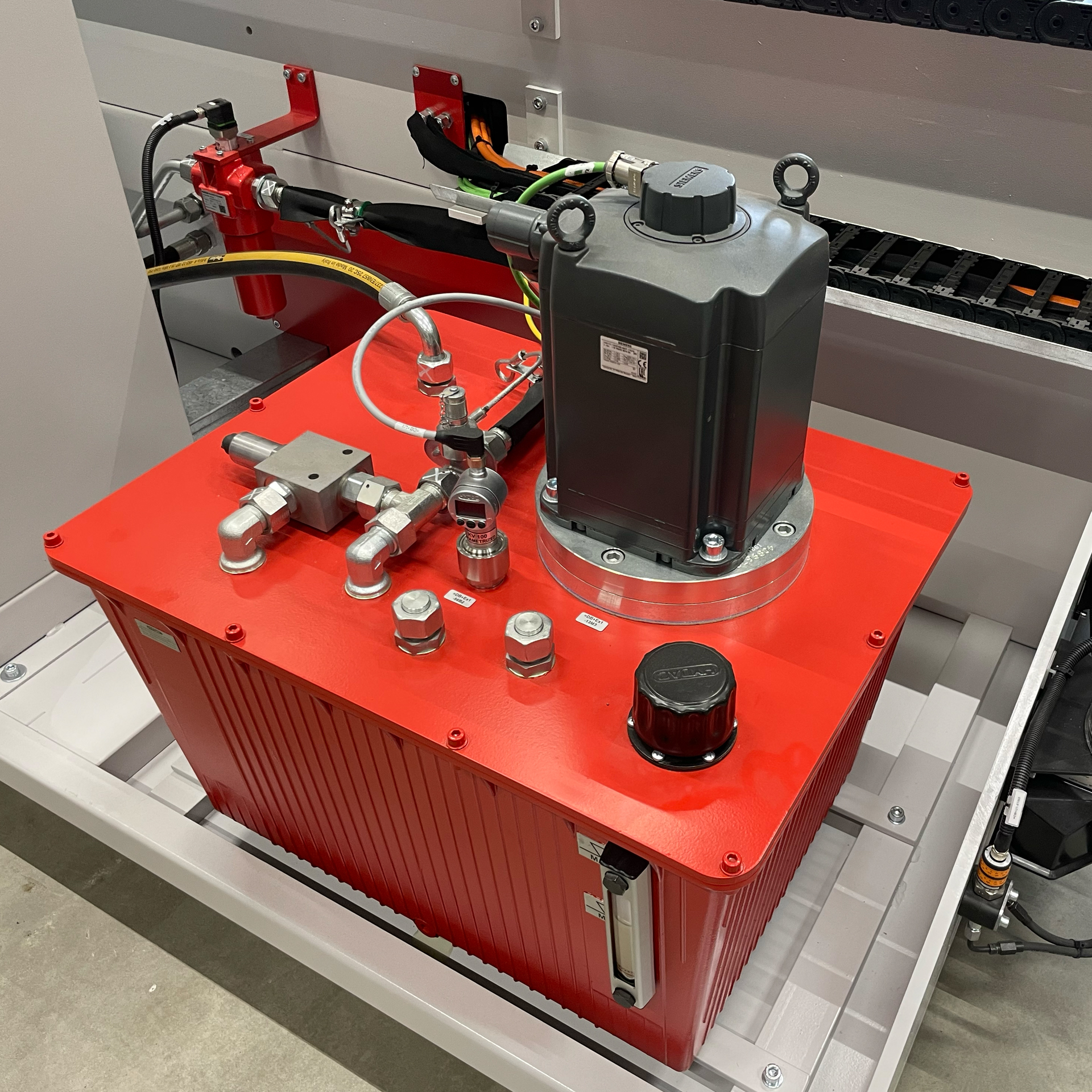
Hydraulikaggregat mit Servomotor und Ventiltechnik auf einer CNC-Rohrbiegemaschine zur präzisen Steuerung des Hydraulikdrucks im industriellen Biegeprozess.

An example of the reduction in operating costs

Our t bend POWERLINE bending machines have a hydraulic unit with an output of approx. 60 l/min and a maximum operating pressure of 200 bar. Previously, a 15 kW drive was required for this. On average, approx. 80 % of the drive power is called up, as normal motors have a high power requirement even when idling. With 6 hours of daily use, this results in an annual power consumption of 15,840 kWh.


In a typical bending cycle with interval times of 5 seconds for loading and unloading the tubes, a servo pump has an average power consumption of less than 4 kW. This corresponds to an annual consumption of 5,280 kWh. If one kilowatt hour costs 0.25 euros, the new transfluid technology saves electricity costs of 2,640 euros per year. Low maintenance and repair costs due to the simplified fan technology increase this efficiency.